Best Mini Split for Cold Climates: What to Check
Choosing a mini split for cold weather: HSPF2 regions, ENERGY STAR Cold Climate criteria, rated vs. minimum temperature, defrost, snow, and backup heat.
At a glance
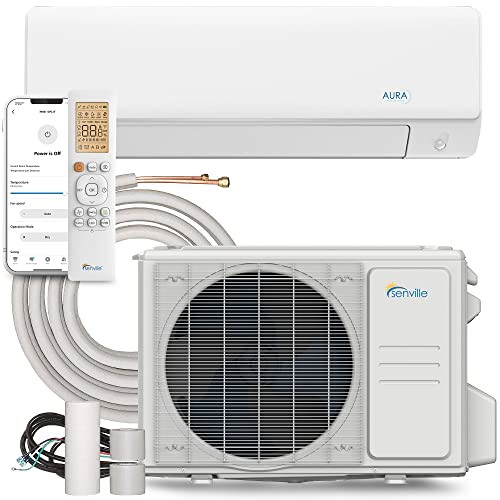
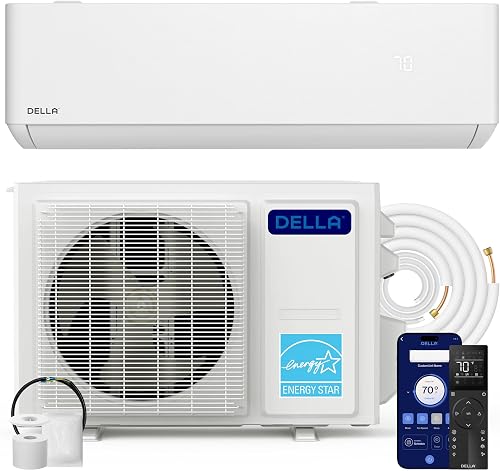
For a mini split that must carry real winter heat, look for a published low-temperature rating, not just an operating limit. The Senville AURA lists heating to -22°F, the Della Optima lists -13°F on 115V, and the MRCOOL DIY 5th Gen 2-Zone lists a Cold Climate certification.

Mini splits have a reputation for being warm-weather appliances, and that reputation is out of date. Modern inverter heat pumps keep delivering heat at outdoor temperatures that would have stopped older models, and ENERGY STAR says many newer certified mini splits perform well in very cold climates. But in a northern state, where the mini split may be your main heat source for a living area, basement, or addition, the details matter. A box that says it works at -13°F does not say how much heat the unit moves at that temperature. This guide explains the numbers that do, then matches models from our list to cold-weather buyers.
We do not test products ourselves. Specifications come from the makers’ own pages and brochures, and the standards come from ENERGY STAR and NEEP pages listed under Sources.
The Short Answer
- A heat pump does both heating and cooling. You do not need a special heat-only model.
- Look for a published rating at 5°F (capacity or COP), an ENERGY STAR Cold Climate certification, or a NEEP listing, not just a minimum operating temperature.
- Compare HSPF2 for your climate region. Region V is the cold-north rating.
- Plan for backup heat on the coldest days, and mount the outdoor unit above the snow line.
Heat Pump, Not Heat Only
Shoppers searching for a mini split for heating, or even a heat-only model, often worry that a cooling-focused unit will not heat well. The reverse-cycle design means a mini split is a heat pump: it moves heat into the house in winter and out in summer. The listings in this guide are all heat pumps. You do not need to hunt for a heat-only mini split; the real cold-weather question is how well the heating side holds up as the outdoor temperature drops.
Operating Limit vs. Rated Capacity
Manufacturers publish a minimum operating temperature, the lowest outdoor temperature at which the unit is designed to run. Senville lists heating down to -22°F for the AURA, and Della lists -13°F for the Optima. Those are useful comparisons, but an operating limit is not a statement of output. As the temperature drops, the heat the unit can pull from outdoor air drops with it, and a unit may run at reduced capacity at the limit.
The more informative figure is performance at 5°F. ENERGY STAR’s page says certified units have third-party verified performance for low temperatures, with testing down to 5°F. That is why we weigh certifications and 5°F data above the headline temperature when we compare.
What ENERGY STAR Cold Climate Requires
ENERGY STAR’s Version 6.2 heat pump specification (Rev. March 2025) defines a Cold Climate designation. For non-ducted split systems, which is what a mini split is, the energy-efficiency criteria are:
- SEER2 of at least 15.2
- HSPF2 of at least 8.5
The unit must also show low-ambient performance:
- A coefficient of performance (COP) of at least 1.75 at 5°F
- A heating capacity at 5°F of at least 70 percent of its nominal capacity at 47°F
The COP figure means the unit delivers at least 1.75 units of heat for each unit of electricity at 5°F. The 70 percent figure means that a unit rated at 12,000 BTU of heating at 47°F must still deliver at least 8,400 BTU at 5°F. Those are the numbers to hold against any model whose maker only quotes an operating limit.
NEEP’s Cold-Climate List
NEEP, the Northeast Energy Efficiency Partnerships, hosts a cold climate air-source heat pump specification and product list. NEEP says the specification is meant to identify heat pumps best suited to heat efficiently in cold climates, defined as IECC climate zone 4 and higher, and that it addresses a gap in the HSPF metric, which does not test below 17°F. Programs can use it as a minimum requirement for qualification, so a NEEP listing can also matter if you are hoping for a local incentive. Check the current list for the exact model number, because listings are tied to specific model combinations.
HSPF2 Regions
HSPF2 is a seasonal heating efficiency number, and it is reported by region. Region IV covers much of the middle of the country, while region V is the colder north. The same unit scores lower in region V because it spends more hours at low temperatures. Senville lists the AURA at 10.5 for region IV and 8 for region V, a drop that shows why a region IV number alone flatters a unit you plan to use in a cold state. When a maker lists only region IV, as Della does on the page we read for the Optima, treat the cold-north efficiency as unknown.
Defrost, Snow, and Siting
Outdoor coils frost up in cold, humid weather, and the unit periodically reverses to melt the frost. That is normal. It causes a brief pause in indoor heating and a burst of water from the outdoor unit. Siting matters:
- Mount the outdoor unit on a stand or wall bracket above the usual snow line.
- Keep it clear of roof runoff, falling icicles, and drifting snow.
- Leave room for defrost water to drain away from walkways, since it can freeze into a hazard.
- Follow the manual’s clearances so air can move through the coil.
Backup Heat
ENERGY STAR’s page says units keep working below 5°F, but that pairing a mini split with a backup heat source is most efficient at lower temperatures. For an older house, a leaky garage, or a basement in the far north, we would plan on backup heat for the coldest nights. For a primary-heat plan, ask a contractor for a Manual J load calculation. ENERGY STAR says proper sizing is essential and that a unit that is too small or too large will struggle.
Installation: DIY or Professional
Only the pre-charged quick-connect kits, such as MRCOOL’s DIY lines, are designed for a homeowner to connect without a vacuum pump or refrigerant handling. Flare-connection systems need a vacuum, a leak check, and refrigerant handling, and the EPA says technicians who service or repair equipment that could release refrigerant must be Section 608 certified. Electrical work, including the dedicated circuit and disconnect, should follow the National Electrical Code and local rules, with a licensed electrician where required.
The federal 25C home improvement credit applied only to property placed in service through December 31, 2025, per the IRS, so it has expired for 2026 installs. Some utilities still offer rebates; ENERGY STAR’s Rebate Finder is the place to start.
Which Models Fit a Cold Climate
Of our nine models, these three are the ones whose makers publish the most cold-weather information.
Senville AURA 12K: Lowest Listed Heating Limit
A 208/230V heat pump that Senville lists for heating down to -22°F, with HSPF2 of 10.5 for region IV and 8 for region V. Professional install.
According to Senville, the AURA is ENERGY STAR certified at 25.4 SEER2, covers 500 to 750 sq ft, and comes with a 10-year compressor warranty and 5-year parts coverage. Confirm whether this exact model appears on the ENERGY STAR Cold Climate and NEEP lists before you rely on it. The Senville AURA profile has more.
Della Optima 12K: Cold-Weather Range on 115V
A 115V unit that Della lists for heating down to -13°F. A fit for a cold garage, workshop, or small room where a 230V circuit is not available.
Della lists 12,400 BTU of heating capacity, 23 SEER2, and HSPF2 of 10 for region IV. It does not publish a region V rating or a capacity curve on the page we read, so treat the operating limit as a limit, not a promise of output. See the Della Optima profile.
MRCOOL DIY 5th Gen 2-Zone 18K: Cold Climate Certification, Two Rooms
Two 9,000 BTU heads on one outdoor unit, with a brochure that lists ENERGY STAR Cold Climate and NEEP listing. Quick-connect line sets are designed for homeowner install.
MRCOOL’s page shows heating at -13°F, and the multi-zone brochure (version 06-24-2025, marked preliminary) lists 23.9 SEER2, HSPF2 of 10.0 for region IV, and 208-230V. Because the brochure is preliminary, confirm the certification on the current ENERGY STAR and NEEP listings before you buy. Read the MRCOOL 5th Gen 2-Zone profile.
Quick Decision Guide
- Coldest winters, 230V available: Senville AURA, for its lowest listed limit and region V rating.
- Cold winters, 115V only: Della Optima.
- Two rooms and a certification you can verify: MRCOOL 5th Gen 2-Zone.
For milder winters, our quick-connect 115V profile covers a homeowner-install option.
For the full lineup, including the models not covered here, see our ranking of the best mini splits of 2026.
Sources
- ENERGY STAR: Ductless Heating and Cooling
- ENERGY STAR Version 6.2 Heat Pump Specification (Rev. March 2025)
- NEEP: Cold Climate Air Source Heat Pump Specification and Product List
- EPA: Section 608 Technician Certification Requirements
- IRS: Energy Efficient Home Improvement Credit
- Senville AURA 12,000 BTU official product page
- Della Optima 12,000 BTU official product page
- MRCOOL DIY 5th Generation official page
Frequently asked questions
What does ENERGY STAR Cold Climate certification require?
ENERGY STAR's Version 6.2 heat pump specification sets the Cold Climate criteria for non-ducted split systems at SEER2 of at least 15.2 and HSPF2 of at least 8.5. The unit must also reach a COP of at least 1.75 at 5°F and deliver at least 70 percent of its 47°F heating capacity at 5°F.
Is a unit's minimum operating temperature the same as its rated heating capacity?
No. A maker's listed operating limit, such as -13°F or -22°F, tells you the unit is designed to keep running down to that temperature. It does not tell you how much heat it delivers there. Capacity falls as it gets colder, so look for a published capacity or COP at 5°F.
Do I need a heat-only mini split for a cold climate?
No. A mini split heat pump heats and cools with the same equipment, and the listings in this guide are heat pumps. There is no separate heat-only mode to hunt for. What matters is how well the unit heats at low outdoor temperatures.
What is the difference between HSPF2 region IV and region V?
HSPF2 is a seasonal heating efficiency rating, and it is reported by climate region. Region IV covers much of the middle of the country, while region V is the colder north, and the same unit scores lower in region V. Senville lists 10.5 for region IV and 8 for region V on the AURA, which shows how much the number can change.
Do I still need backup heat with a mini split?
ENERGY STAR says many newer certified mini splits perform well in very cold climates and that units keep working below 5°F, but it also says pairing one with a backup heat source is most efficient at the lowest temperatures. If you rely on the mini split as your main heat, ask a contractor to size it with a Manual J calculation and plan for the coldest nights.
How should I mount the outdoor unit in snow country?
Put it on a stand or wall bracket above the usual snow line, keep it clear of roof runoff and drifts, and leave room for defrost water to drain away from walkways. Check the manual for clearances.